
Sustainability
Why it Matters
Sustainability in fashion is about more than reducing waste, it’s about responsible material use, traceable sourcing, and mindful creation. At Umbruma, every fiber I work with is biodegradable and renewable, including wool, merino, mohair, alpaca, cotton, linen and others.
Choosing natural fibers reduces the environmental impact of fashion by minimizing synthetic waste and creating garments that are built to last. These materials are functional, beautiful, and connected to the landscapes, seasons, and ecosystems that produce them. Understanding sustainability is understanding the lifecycle of what you wear, from field and flock to finished design.
Traceability & Material Origins
Traceability is central to Umbruma. I work directly with Spanish shepherds and small producers, local dyers, and selected small European producers to source fibers. For most materials, I know the flock, the shepherd, and how the animals are cared for, as well as the processes used to transform fiber into yarn. In some cases, you’ll even see the name and picture of the animal whose wool became the yarn in your garment.
When yarns are processed or dyed by other artisans, I share who worked on them, so every stage of the material’s journey is transparent. This approach allows the story of each fiber to be part of the garment, connecting you directly to its origin and the people who nurtured it.
By following the journey of fibers from their source to the studio, I aim to create pieces that reflect both care for the animals and respect for the environment, while inviting you to appreciate the story behind every fiber.
Seasonal Rhythms
Working with natural fibers means designing in harmony with nature’s cycles. Sheep are shorn seasonally, and plants like cotton or flax are harvested according to their growth cycles. The availability and color of yarns can also vary with the seasons. It will happened that i buy a yarn in a specific colour that is later discontinued.
This rhythm guides when and what I create. Pieces are designed stitch by stitch, respecting the natural characteristics of each fiber. Following seasonal cycles encourages slow, intentional design, garments made with care rather than speed, respecting the limits and strengths of the materials.
The Journey from Fleece to Yarn
Every fiber, whether animal or plant-based, has a journey before it reaches the studio,
For animal fibers the general path is :
1. Sheep & Grazing : Animals are raised responsibly, often following transhumance cycles.
2. Shearing : Fleece is collected carefully, typically once per year.
3. Sorting & Grading : Fibers are sorted by quality, length, and texture.
4. Washing (Scouring) : Cleaning removes impurities while maintaining fiber integrity.
5. Carding & Combing : Fibers are aligned to prepare for spinning.
6. Spinning : Fibers are twisted into yarn, defining thickness and strength.
7. Dyeing : Optional colouring using natural or low-impact dyes.
For vegetable fibers the general path is :
1. Planting
2. Harvest : Mechanical pickers or strippers pluck the mature, fluffy cotton bolls from the plant fields.
3. Retting or Ginning : Fiber Separation
4. Preparation / Carding : he loose cotton passes through a carding machine equipped with wire-pinned cylinders. This combs out remaining trash and aligns the fibers into a loose, rope-like strand called a sliver.
5. Spinning : he loose cotton passes through a carding machine equipped with wire-pinned cylinders. This combs out remaining trash and aligns the fibers into a loose, rope-like strand called a sliver.
6. Dyeing : Optional colouring using natural or low-impact dyes.
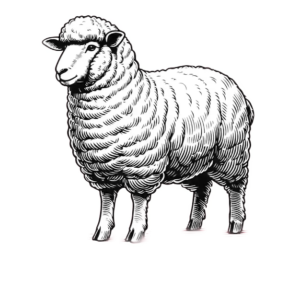
Spanish wool Industry
Overview
Today, Spain remains one of the largest wool producers in the European Union, but the modern wool sector exists within a landscape of abundance in raw material and scarcity in processing and market value. In recent agricultural reporting:
The main wool‑producing regions include Extremadura, Castilla y León, Andalucía, and Castilla‑La Mancha, which together account for the majority of national wool output.
As of the latest reports:*
Despite these significant volumes of raw wool, much of it does not enter domestic textile manufacturing, and a large portion is instead sold as raw commodity fiber or exported with minimal processing, rather than being transformed into finished textiles within Spain.
*“Estadística de lana, miel y huevos para consumo humano– Año 2024”, Ministerio de Agricultura, Pesca y Alimentación.
Structure & Processing Capacity
While Spain still produces significant amounts of raw wool each year, the industrial infrastructure that once supported full internal processing, from washing and carding to spinning, weaving, and finishing, has contracted dramatically over recent decades. What remains today is a mix of small‑scale facilities, niche specialists, and a broader textile industry where wool is a minor component.
In practical terms, the wool processing pathway that once existed (where raw fleece could be cleaned, sorted, carded, spun, woven, dyed, and finished locally) is no longer the norm.
Regional Concentration & Shepherding Realities
Spanish wool production is regionally concentrated. Areas such as Extremadura, Castilla y León, Andalusia, and Castile‑La Mancha host many of the flocks that supply raw wool. Despite this, many shepherds today face economic challenges:
What Happens to Unused Wool
Industry Actors & Small‑Scale Revivals
In contrast to large‑scale industrial decline, small initiatives and artisan collaborations are working to revalue Spanish wool and rebuild localized textile ecosystems. Examples include small mills that still process wool in regional facilities and grassroots groups focused on “quality wool revalorization.” These efforts aim to:
– Promote local wool as a high‑value specialist material
– Maintain artisanal knowledge and processing skills
– Reconnect fiber production with local craft and design markets
Such initiatives reflect a growing interest in heritage and sustainable textiles, especially where natural fibers are prized for their ecological performance and cultural significance.
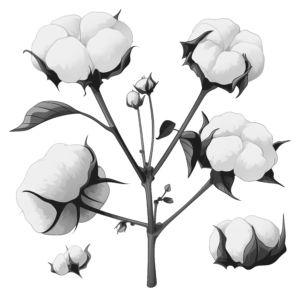
Spanish Vegetable Fibers Industry
Cotton is the main commercially grown vegetable fiber in Spain, concentrated mainly in Andalusia and other southern regions due to suitable climates and irrigation infrastructure. Spain accounts for roughly 20 % of the European Union’s cotton area and production, making it one of the continent’s key cotton producers.
According to Spanish agricultural statistics (MAPA – Ministerio de Agricultura,MAPA’s Anuario de Estadística Agraria 2024 ):
Despite being an important crop, most of Spain’s cotton does not complete the full yarn‑to‑fabric processing domestically. Technical spinning and further textile finishing generally take place outside the country, even though the raw cotton is harvested locally.
Linen (made from flax) has a long historical footprint in Spain but exists today on a very modest scale in contemporary agriculture. According to the latest official crop statistics:
These numbers show that formal linen cultivation exists in Spain today only as a very small crop, often tied to specialist agricultural projects rather than large‑scale commercial production. However, historical data shows that linen was once much more widespread, in decades past, production reached tens of thousands of hectares before largely disappearing in the late 20th century.
Industrial hemp, which can produce both hurd (core) and bast (fiber), has seen a resurgence as legal cultivation expands in parts of Spain. Hemp fiber is valued for its strength and durability and is often grown for a mix of uses, including textiles, biocomposites, and building materials.
According to Spanish agricultural statistics (MAPA – Ministerio de Agricultura): Hemp fiber cultivation was noted at 32 hectares, producing 147 tonnes of fiber for textile and industrial use In 2024.