9 yarns, 5 times, 45 samples and 3 ombré skeins
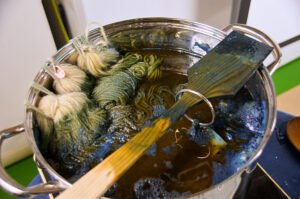
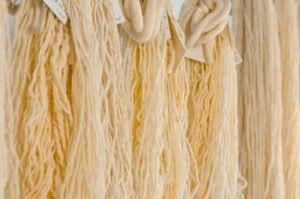
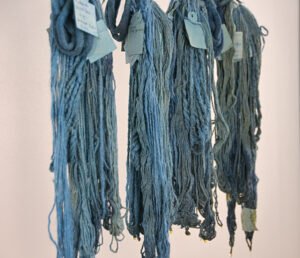
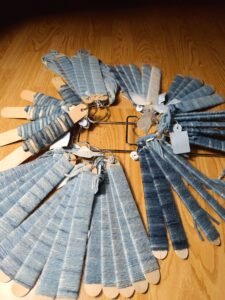
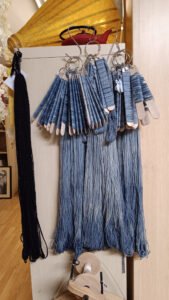
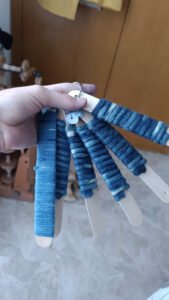
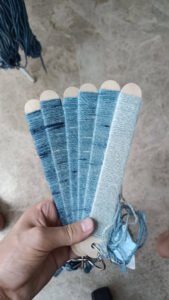
I didn’t want to just dye one skein. I wanted to understand what was happening. So I made a grid. Nine different yarns, all in their natural undyed colour, each one split into five small 5 gram samples. Each sample went into the vat for a different time:
– 1 dip, 5 minutes
– 1 dip, 10 minutes
– 1 dip, 15 minutes
– 1 dip, 20 minutes
– 1 dip, 20 minutes, then around 40 minutes of oxidation, then a second dip of 5 minutes.
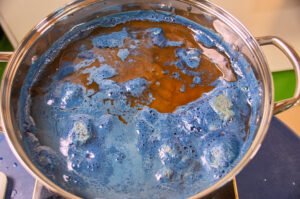
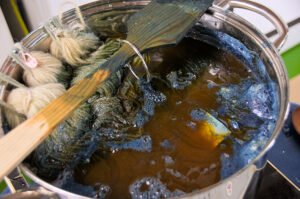
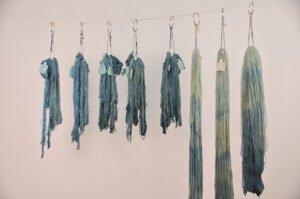
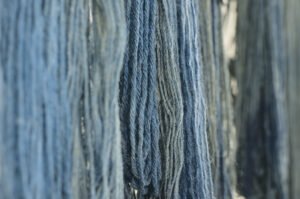
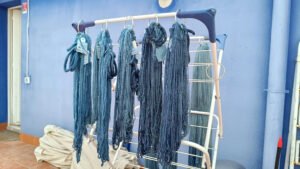
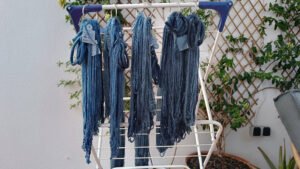
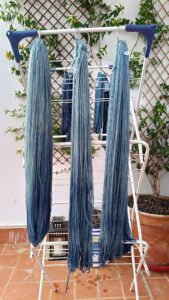
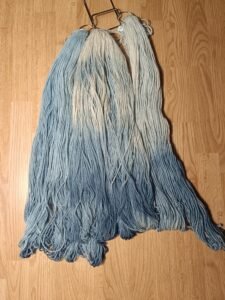
The grid was the experiment. Then I wanted to see the same idea in a full skein. I took three whole skeins and wanted to try an ombre effect. To make the ombré, I only put the bottom of the skein into the pot and let the rest hang over the edge. Every five minutes I lowered it a little further in, until the bottom had been in for 20 minutes. The bottom got 20 minutes, the next section 15, then 10, then 5 at the top. The result is a skein that steps from pale sea-glass at the top to deep denim at the bottom. It is the 5, 10, 15, 20 minute grid all in one continuous yarn.
I’m sure you’re going to recognise some of the yarns that i used:
Alpacas El Camino, Boreas, 100% suri alpaca. Spun by me into a 2-ply. Yes, the Spinning Journal and the Dye Journal meet in the very first log.
Alpacas El Camino, Marino, 50% alpaca, 25% merino, 25% nettle. The same yarn as in Terra, with merino from Fuente de los Romeros, Miro and Rita’s flock.
Alpacas El Camino, suri alpaca and Egyptian cotton. The alpaca comes from Tristán, one of their own animals.
Dehesalana, 100% white merino, 4-ply. Dehesalana is a project of ACTYVA, a social economy cooperative in Cáceres, born in 2015 to bring Extremaduran merino back to homes and workshops, and to fight the idea that wool is a byproduct. It isn’t.
Dehesalana, 100% white merino, 2-ply, handspun by me from their combed wool. Same fibre as the one above, one spun by a mill, one spun by me, side by side in the same vat.
dLana, Romera, 100% merino (ombré). From Fuente de los Romeros, Miro and Rita’s flock. Miro spent many days of his childhood in the shepherds’ huts of northern León and gave his life to transhumance, and in 2019 his project Retornar al Origen created the first flock in Spain combining Spanish and Australian merino genetics. dLana, Esther and Javi’s project, have worked with their wool since 2022. The natural white of this yarn is the colour of the flock itself.
Wooldreamers, alpaca and merino (grid and ombré). The natural yarn of Signum, Sol and Herba: alpaca from Alpacas del Miera in Cantabria and merino from Dehesa de Barrera in Extremadura.
Wooldreamers, Mota Alpaca, 2-ply (ombré). Half alpaca from Alpacas del Miera, half Manchega and extrafine merino.
Wooldreamers, one-off merino and cotton. From the same limited production run as the yarn in Floris.
Wooldreamers, Ripollesa. From their Breeds collection, one skein per native Spanish breed. The Ripollesa is a Catalan sheep, born from an ancient cross between the sheep of the central Pyrenees and merino brought in by transhumance, and named after the Ripollès. It is classified as an endangered native breed. This one is a felt yarn, thick and soft.
Wooldreamers, Saona, Spanish wool and Andalusian cotton. The yarn of the Sierra dress.